





Array
(
    [content] =>
    [params] => Array
        (
            [0] => /forum/threads/how-does-the-hbf-vs-xpoint-technology.25253/
        )

    [addOns] => Array
        (
            [DL6/MLTP] => 13
            [Hampel/TimeZoneDebug] => 1000070
            [SV/ChangePostDate] => 2010200
            [SemiWiki/Newsletter] => 1000010
            [SemiWiki/WPMenu] => 1000010
            [SemiWiki/XPressExtend] => 1000010
            [ThemeHouse/XLink] => 1000970
            [ThemeHouse/XPress] => 1010570
            [XF] => 2031070
            [XFI] => 1060170
        )

    [wordpress] => /var/www/html
)
Guests have limited access.
Join our community today!
Join our community today!
You are currently viewing SemiWiki as a guest which gives you limited access to the site. To view blog comments and experience other SemiWiki features you must be a registered member. Registration is fast, simple, and absolutely free so please, join our community today!
You are using an out of date browser. It may not display this or other websites correctly.
You should upgrade or use an alternative browser.
You should upgrade or use an alternative browser.
How does the HBF vs Xpoint technology
- Thread starter skybluega
- Start date

Dear experts, I am wondering how the HBF compared with the discontinued intel Xpoint technology?
HBM correct?
HBM is designed to feed GPUs with enormous amounts of data, reaching bandwidth in the terabytes-per-second range. That's why NVIDIA's AI systems and AMD's Instinct accelerators rely on HBM. Optane Persistent Memory was much slower. Real measurements found read latency around 374 ns and bandwidth around 38 GB/s for reads, which is probably why Optane is dead.
I think a fair comparison would have the 3DXPoint dies linked by TSVs just like HBF and HBM (for 3D NAND and DRAM dies, respectively). The cost and performance were already not good enough for the 3D XPoint by itself to support a large enough market.Dear experts, I am wondering how the HBF compared with the discontinued intel Xpoint technology?
The DRAM and NAND prices have gone up, but I am sure the same would go for the XPoint, which was already starting a little too high, and now lacks sufficient suppliers.
Also, the current thinking is to replace 3D XPoint with 3D SOM, but it's still under development.
Last edited:
siliconbruh999
Well-known member
Dan i think you are confusing HBM(High Bandwidth Memory) with HBF(High Bandwidth Flash memory) which is meant as more of like SSD replacement like OptaneHBM correct?
HBM is designed to feed GPUs with enormous amounts of data, reaching bandwidth in the terabytes-per-second range. That's why NVIDIA's AI systems and AMD's Instinct accelerators rely on HBM. Optane Persistent Memory was much slower. Real measurements found read latency around 374 ns and bandwidth around 38 GB/s for reads, which is probably why Optane is dead.
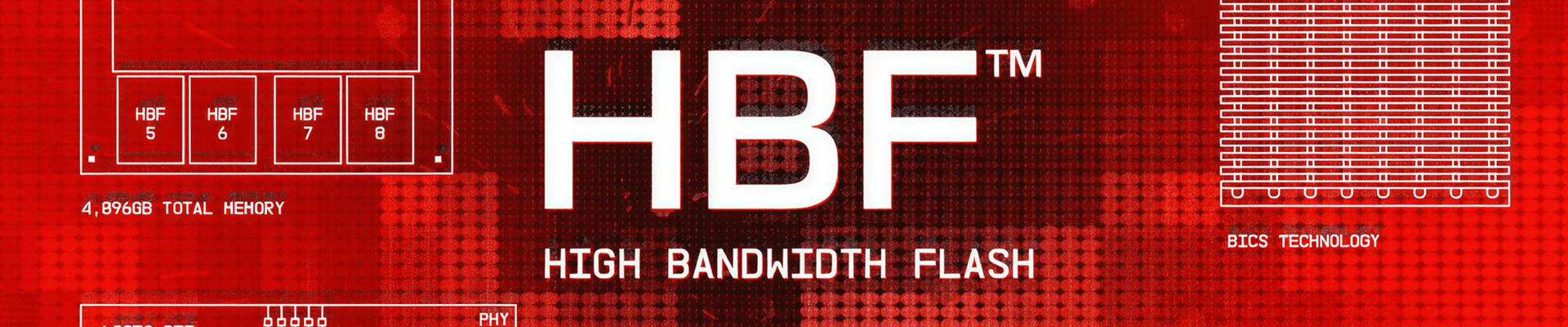
Scaling the Memory Wall: Behind Sandisk’s High Bandwidth Flash for AI Inferencing | Sandisk
High Bandwidth Flash (HBF)—a new form of NAND—delivers performance within 2.2% of unlimited-capacity HBM, while offering a significant increase in memory capacity—unlocking AI services that traditional HBM simply can’t support. Powered by Sandisk’s CBA (CMOS directly Bonded to Array)...