You are currently viewing SemiWiki as a guest which gives you limited access to the site. To view blog comments and experience other SemiWiki features you must be a registered member. Registration is fast, simple, and absolutely free so please,
join our community today!
            WP_Term Object
(
    [term_id] => 14
    [name] => Synopsys
    [slug] => synopsys
    [term_group] => 0
    [term_taxonomy_id] => 14
    [taxonomy] => category
    [description] =>
    [parent] => 157
    [count] => 802
    [filter] => raw
    [cat_ID] => 14
    [category_count] => 802
    [category_description] =>
    [cat_name] => Synopsys
    [category_nicename] => synopsys
    [category_parent] => 157
    [is_post] =>
)

WP_Term Object
(
    [term_id] => 14
    [name] => Synopsys
    [slug] => synopsys
    [term_group] => 0
    [term_taxonomy_id] => 14
    [taxonomy] => category
    [description] =>
    [parent] => 157
    [count] => 802
    [filter] => raw
    [cat_ID] => 14
    [category_count] => 802
    [category_description] =>
    [cat_name] => Synopsys
    [category_nicename] => synopsys
    [category_parent] => 157
    [is_post] =>
)
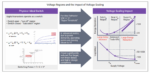
As artificial intelligence (AI) workloads migrate to endpoint hardware, edge AI devices face immense pressure to deliver real-time inference within highly restrictive power and thermal envelopes. Traditional silicon scaling no longer yields the power-density returns it once did. To compensate, engineering teams are turning… Read More
Synopsys today announced its AgentEngineerTM solutions portfolio and AutopilotTM Platform, advancing a fundamental paradigm shift in electronic design automation (EDA): moving beyond AI copilots toward autonomous engineering agents. Following a recent technical briefing with Thomas Andersen, Vice President of AI and… Read More
The $9.5 Billion Design IP Market: Shifting Boundaries, Arm’s Monopoly, and the RISC-V Responseby Kalar Rajendiran on 09-04-2026 at 6:00 amCategories: AI, Arm, IP, IPnest, RISC-V, Semiconductor, Semiconductor Intelligence, Semiconductor Services, SiFive, Synopsys
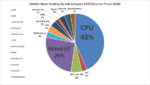
While semiconductor design intellectual property (IP) is a $9.45 billion market, it acts as the absolute architectural bottleneck for the entire global semiconductor value chain. The choices made at the IP layer today dictate the cost, power, and security of a downstream technology economy rapidly marching toward a trillion… Read More
Synopsys and Intel Foundry are expanding their collaboration to accelerate customer adoption of Intel 14A, connecting advanced process technology with production-ready electronic design automation, silicon intellectual property, multiphysics analysis, and multi-die integration. Announced at the 2026 DAC Chips to … Read More
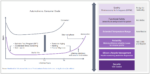
Software defined vehicles (SDVs) are transforming the automotive industry. Today’s vehicles are connected computing platforms that rely on advanced processors, artificial intelligence (AI), over the air (OTA) software updates, cloud services, and vehicle to everything (V2X) communications. Every electronic … Read More
As architects push toward advanced nodes and increasingly demanding workloads, modern silicon design has entered an era of unprecedented complexity. A single design respin can cost millions of dollars and delay market entry. Against this backdrop, designs must be balanced for performance, bandwidth, power efficiency, security… Read More
Daniel is joined by Kent Lusted, a Distinguished Architect at Synopsys and an integral part of the company’s Ethernet IP design team. He has been an active contributor and member of the IEEE 802.3 Ethernet PHY standards development leadership team for more than 15 years. Prior to Synopsys, Kent worked at Intel for 30+ years, focused… Read More
As vehicles become increasingly software-defined, automotive semiconductor suppliers face growing pressure to deliver higher compute performance while maintaining strict requirements for power efficiency, reliability, and long-term product support. Advanced driver assistance systems (ADAS), electrification, … Read More
As advanced packaging becomes a critical enabler for next-generation semiconductor products, Intel continues to drive innovation through its Embedded Multi-die Interconnect Bridge (EMIB) technology. EMIB has emerged as a foundational packaging solution for heterogeneous integration, allowing multiple chiplets and… Read More
Processor IP garners the most attention in SoC design, but it’s not the only IP category begging for smart choices. Every processor core needs to be fed with data; however, frequent off-chip DRAM access incurs a large clock-cycle penalty each time. Architects now want SRAM blocks distributed throughout an SoC, putting data close… Read More