





Array
(
    [content] => 
    [params] => Array
        (
            [0] => /forum/threads/pumping-the-oil-of-the-21st-century-tsmc-versus-intel.24428/
        )

    [addOns] => Array
        (
            [DL6/MLTP] => 13
            [Hampel/TimeZoneDebug] => 1000070
            [SV/ChangePostDate] => 2010200
            [SemiWiki/Newsletter] => 1000010
            [SemiWiki/WPMenu] => 1000010
            [SemiWiki/XPressExtend] => 1000010
            [ThemeHouse/XLink] => 1000970
            [ThemeHouse/XPress] => 1010570
            [XF] => 2030871
            [XFI] => 1060170
        )

    [wordpress] => /var/www/html
)

Pumping the oil of the 21st century: TSMC versus INTEL

user nl

Well-known member
It is so easy these days to have AI make some historic financial overview of business performances. Below is a table generated by Google's Gemini
summarizing some key numbers for TSMC and INTEL, and it is really amazing when you compare these numbers.

It will be interesting to see what will happen when during the next 3 years 2026-2028 TSMC will "flood" the semi-system with some >150 B$ in capex and how their Fabs/nodes (2, 3, 5, 7 etc) will become (and are already) enormous cash printing machines.

TSMC may spend more in Capex in 2026 than the total (expected) revenue of INTEL this year.

Of course, INTEL and SAMSUNG will pump some overflow "made-in-USA-oil" orders from customers because of the lack of capacity at TSMC. But once that wafer and advanced packing capacity of TSMC is "on the market" around 2029, it is hard to see how INTEL Foundry will be an economical competitor to TSMC.

If we assume a (conservative) CAGR of 25% during 2026-2029 the expected revenue of TSMC will be 300 B$ and if they keep their net profit margin of 45-50% they will generate a net profit of some 150 B$ in a single year.

TSMC will be a one-member "OPEC" for the best (performance/watt) oil of the 21st century. Amazing story.........


1769603313007.png
 

Attachments

  • 1769604945371.png
    1769604945371.png
    30.9 KB · Views: 154
It is so easy these days to have AI make some historic financial overview of business performances. Below is a table generated by Google's Gemini
summarizing some key numbers for TSMC and INTEL, and it is really amazing when you compare these numbers.

It will be interesting to see what will happen when during the next 3 years 2026-2028 TSMC will "flood" the semi-system with some >150 B$ in capex and how their Fabs/nodes (2, 3, 5, 7 etc) will become (and are already) enormous cash printing machines.

TSMC may spend more in Capex in 2026 than the total (expected) revenue of INTEL this year.

Of course, INTEL and SAMSUNG will pump some overflow "made-in-USA-oil" orders from customers because of the lack of capacity at TSMC. But once that wafer and advanced packing capacity of TSMC is "on the market" around 2029, it is hard to see how INTEL Foundry will be an economical competitor to TSMC.

If we assume a (conservative) CAGR of 25% during 2026-2029 the expected revenue of TSMC will be 300 B$ and if they keep their net profit margin of 45-50% they will generate a net profit of some 150 B$ in a single year.

TSMC will be a one-member "OPEC" for the best (performance/watt) oil of the 21st century. Amazing story.........
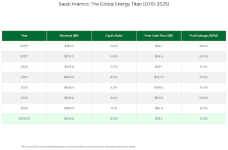

View attachment 4108

Great analysis! Thanks. Do you have any thoughts on how Intel can get out of this downward spiral?

Dominant does not necessarily mean monopoly. TSMC’s business practices are far more aligned with a “global collaboration model” and far less with anything resembling a monopoly. TSMC’s pure‑play foundry model is both more efficient and more profitable than Intel’s IDM model. While TSMC has enjoyed strong revenue growth and high profitability, its major customers, such as Apple, Nvidia, AMD, Qualcomm, MediaTek, and Broadcom, have also thrived. In contrast, although Intel’s profits were once strong, its major OEM customers (Dell, HP, Lenovo, Asus, Acer) have struggled for years with razor‑thin net margins of just 1% to 5%.

IMO, Without changing its IDM business model, Intel will continue to struggle with net losses and shrinking revenue. IFS can't save Intel.
 
Great analysis! Thanks. Do you have any thoughts on how Intel can get out of this downward spiral?

Dominant does not necessarily mean monopoly. TSMC’s business practices are far more aligned with a “global collaboration model” and far less with anything resembling a monopoly. TSMC’s pure‑play foundry model is both more efficient and more profitable than Intel’s IDM model. While TSMC has enjoyed strong revenue growth and high profitability, its major customers, such as Apple, Nvidia, AMD, Qualcomm, MediaTek, and Broadcom, have also thrived. In contrast, although Intel’s profits were once strong, its major OEM customers (Dell, HP, Lenovo, Asus, Acer) have struggled for years with razor‑thin net margins of just 1% to 5%.

IMO, Without changing its IDM business model, Intel will continue to struggle with net losses and shrinking revenue. IFS can't save Intel.

I do not see Intel reclaiming the glory days of the x86 monopoly but I do see the possibility of them being a thriving business. x86, foundry, and ASIC business. It would be nice if Intel can get in on the AI gold rush but the window is closing for that.

Can Intel Foundry succeed? Yes, definitely. The NOT TSMC market is ripe for the picking and Samsung is still floundering. There is no trust there after many years of claiming to be first only to not yield.

By the end of 2026 you will see some big customers lined up to use IFS, absolutely.
 
Great analysis! Thanks. Do you have any thoughts on how Intel can get out of this downward spiral?

Dominant does not necessarily mean monopoly. TSMC’s business practices are far more aligned with a “global collaboration model” and far less with anything resembling a monopoly. TSMC’s pure‑play foundry model is both more efficient and more profitable than Intel’s IDM model. While TSMC has enjoyed strong revenue growth and high profitability, its major customers, such as Apple, Nvidia, AMD, Qualcomm, MediaTek, and Broadcom, have also thrived. In contrast, although Intel’s profits were once strong, its major OEM customers (Dell, HP, Lenovo, Asus, Acer) have struggled for years with razor‑thin net margins of just 1% to 5%.

IMO, Without changing its IDM business model, Intel will continue to struggle with net losses and shrinking revenue. IFS can't save Intel.

No idea.

It is kind of interesting that the USA, because of national security reasons, has decided to subsidize its national "21st century oil" producer for the coming decade(s ?). I think this is a bi-partisan decision, see the Chips-act and the 10% stake.

So, for as long the USA-China great power battle continues INTEL Foundry will be kept alive by INTEL Products, the US administration and some other big companies like NVIDIA, Microsoft, Apple that will provide IFS with some small orders the coming 5-10 years. Enough to keep IFS from starving to death, but probably not enough to have IFS reaching ever 50% gross margin on leading edge nodes.

How IFS at some point will finance new fabs and tools, CEO LBT has made it clear he will not ramp 14A when there is no outside commitments for capacity. So, perhaps the US administration can use all these tarrif and "made-in-USA" rules, that they have already developed, to force NVIDIA, Microsoft, Apple, Google, AMD to commit enough wafers to IFS to subsidize them enough to ramp 14A in 2028-2030.


At the same time TSMC can not complain: they got Chips-act money, cheap loan, 35% tax break and loan guarantees by the Taiwan government in the 250 B investment treaty with US. In total it means all the Arizona investments of 165 B$ by TSMC are also heavily subsidized, and they can import chips from Taiwan for 0 tariff for their US customers as long as the Arizona Giga-campus is under construction. So, all this money for TSMC will help them as well to grow their gross margin and net profit margin.

So, no wonder TSMC feels so confident that they'll manage for the foreseable future (2029 and further) to keep their gross margin (well) above 56%, in 2026 probably already around 63-65%.

As said an amazing story of a cash printing quasi-monopolist, also supported by the US government...........I'm sure there will be many academic papers and books written in 5 to 10 years about how the US got TSMC "striking oil" in Arizona to start their big "oil-production" facility.........;

--------------------------------------------------------------------------------------------------------------------------------------------
Here is what Gemini states about the TSMC support by the US government:

Total Package Value: When combining the $11.6 billion in direct cash/loans with the projected $57.7 billion in tax credits (35% of $165B), the U.S. government is effectively subsidizing roughly 42% of the first three phases of the Phoenix site.

1769630810510.png

The 35% Tax Break: Why It Changed​

Originally, the CHIPS Act (Section 48D) offered a 25% Investment Tax Credit. However, in mid-2025, Congress passed the BASIC Act (Building Advanced Semiconductors Investment Credit), which TSMC and other manufacturers lobbied for to offset the higher costs of U.S. labor and energy.

  • The Incentive: The credit was raised to 35% for projects that commenced construction or expanded production capacity before December 31, 2026.
  • The Financial Impact: For TSMC’s current $165 billion investment roadmap, this 10% increase represents an additional $16.5 billion in tax savings over the life of the project.
 
Remember, Intel is also strong in packaging. Intel Foundry can get a chiplet and packaging order since TSMC does not package foreign die. Hopefully IFS will get full chip orders but chiplets at IFS seem to be a no brainer especially if you need packaging to go with it.
 
Remember, Intel is also strong in packaging. Intel Foundry can get a chiplet and packaging order since TSMC does not package foreign die. Hopefully IFS will get full chip orders but chiplets at IFS seem to be a no brainer especially if you need packaging to go with it.
do you think Intel is stronger than ASE or Amkor in Packaging? If so, why is there no revenue from people using packaging
 
do you think Intel is stronger than ASE or Amkor in Packaging? If so, why is there no revenue from people using packaging

Yes Intel is stronger. Intel is in the lead with BSPD for example. Others are following but Intel is the leader. Packaging revenue will come but it will not be big margins. There really needs to be wafers packaged in there. Again, this is the NOT TSMC packaging market.
 
Can Intel Foundry succeed? Yes, definitely. The NOT TSMC market is ripe for the picking and Samsung is still floundering. There is no trust there after many years of claiming to be first only to not yield.

The “NOT TSMC” market is shrinking or even disappearing day by day, partly thanks to Trump.

When Trump forced TSMC to commit $250 billion to build fabs and advanced packaging facilities in the United States, that decision effectively reshaped the competitive landscape and severely limited the future of Intel Foundry Services for external customers.

Assuming this $250 billion will be spent over the next eight years, and considering that TSMC has already invested about $40 billion in its Phoenix, Arizona projects, TSMC will be spending an average of at least $26.25 billion per year in the US alone over that period.

At the same time, TSMC will continue to invest even more CapEx in Taiwan over the next eight years, building additional capacity beyond what it is constructing in the United States.

As a result, TSMC’s customers will inevitably support more production at TSMC Arizona along with more orders at TSMC Taiwan to reduce the overall cost and to support global growth. Their urgency or need to add Intel as a second foundry source is now much lower than before. One consistent lesson from TSMC’s history is that whenever it builds new capacity, customers must commit to orders before the expansion is publicly announced. Morris Chang often emphasized that TSMC builds fabs based on customer commitments, not speculation.

This is especially true for large customers such as Apple, Qualcomm, Nvidia, AMD, Broadcom, and even Intel. When TSMC agreed to invest $250 billion in the US, it is reasonable to assume that these companies had already committed to placing sufficient orders to justify the scale of the investment.

So where is the future of the “NOT TSMC” market? There is not much room left for IFS to grow. Thanks to Trump.
 
Last edited:
How IFS at some point will finance new fabs and tools, CEO LBT has made it clear he will not ramp 14A when there is no outside commitments for capacity. So, perhaps the US administration can use all these tarrif and "made-in-USA" rules, that they have already developed, to force NVIDIA, Microsoft, Apple, Google, AMD to commit enough wafers to IFS to subsidize them enough to ramp 14A in 2028-2030.

I can assure you that if Intel or Intel Foundry Service needs this level of government intervention just to survive, similar to many state‑owned enterprises in communist countries, then Intel is effectively finished, dead.

By the way, when Trump forced TSMC to agree to invest $250 billion in building fabs in Arizona, the tariff threats and “Made in USA” requirements were effectively removed from TSMC’s and TSMC US customers' list of concerns.
 
Last edited:
No idea.

It is kind of interesting that the USA, because of national security reasons, has decided to subsidize its national "21st century oil" producer for the coming decade(s ?). I think this is a bi-partisan decision, see the Chips-act and the 10% stake.

So, for as long the USA-China great power battle continues INTEL Foundry will be kept alive by INTEL Products, the US administration and some other big companies like NVIDIA, Microsoft, Apple that will provide IFS with some small orders the coming 5-10 years. Enough to keep IFS from starving to death, but probably not enough to have IFS reaching ever 50% gross margin on leading edge nodes.

How IFS at some point will finance new fabs and tools, CEO LBT has made it clear he will not ramp 14A when there is no outside commitments for capacity. So, perhaps the US administration can use all these tarrif and "made-in-USA" rules, that they have already developed, to force NVIDIA, Microsoft, Apple, Google, AMD to commit enough wafers to IFS to subsidize them enough to ramp 14A in 2028-2030.


At the same time TSMC can not complain: they got Chips-act money, cheap loan, 35% tax break and loan guarantees by the Taiwan government in the 250 B investment treaty with US. In total it means all the Arizona investments of 165 B$ by TSMC are also heavily subsidized, and they can import chips from Taiwan for 0 tariff for their US customers as long as the Arizona Giga-campus is under construction. So, all this money for TSMC will help them as well to grow their gross margin and net profit margin.

So, no wonder TSMC feels so confident that they'll manage for the foreseable future (2029 and further) to keep their gross margin (well) above 56%, in 2026 probably already around 63-65%.

As said an amazing story of a cash printing quasi-monopolist, also supported by the US government...........I'm sure there will be many academic papers and books written in 5 to 10 years about how the US got TSMC "striking oil" in Arizona to start their big "oil-production" facility.........;

--------------------------------------------------------------------------------------------------------------------------------------------
Here is what Gemini states about the TSMC support by the US government:

Total Package Value: When combining the $11.6 billion in direct cash/loans with the projected $57.7 billion in tax credits (35% of $165B), the U.S. government is effectively subsidizing roughly 42% of the first three phases of the Phoenix site.

View attachment 4112

The 35% Tax Break: Why It Changed​

Originally, the CHIPS Act (Section 48D) offered a 25% Investment Tax Credit. However, in mid-2025, Congress passed the BASIC Act (Building Advanced Semiconductors Investment Credit), which TSMC and other manufacturers lobbied for to offset the higher costs of U.S. labor and energy.

  • The Incentive: The credit was raised to 35% for projects that commenced construction or expanded production capacity before December 31, 2026.
  • The Financial Impact: For TSMC’s current $165 billion investment roadmap, this 10% increase represents an additional $16.5 billion in tax savings over the life of the project.
"At the same time TSMC can not complain: they got Chips-act money, cheap loan, 35% tax break and loan guarantees by the Taiwan government in the 250 B investment treaty with US. In total it means all the Arizona investments of 165 B$ by TSMC are also heavily subsidized, and they can import chips from Taiwan for 0 tariff for their US customers as long as the Arizona Giga-campus is under construction. So, all this money for TSMC will help them as well to grow their gross margin and net profit margin."

I believe there is an error in your table (or Google's AI generated table) and analysis.

The $250 billion loan credit guarantees are for an additional $250 billion of investment in the United States, this is not part of the $250 billion direct investment in the US (the majority is coming from TSMC). The $250 billion loan guarantees are backed by Taiwan’s government, not by the US government, and not for TSMC, or at least not totally for TSMC.
 
Last edited:

The 35% Tax Break: Why It Changed​

Originally, the CHIPS Act (Section 48D) offered a 25% Investment Tax Credit. However, in mid-2025, Congress passed the BASIC Act (Building Advanced Semiconductors Investment Credit), which TSMC and other manufacturers lobbied for to offset the higher costs of U.S. labor and energy.

This is another mistake made by Google Gemini. It fabricated a claim that, in mid‑2025, Congress passed the BASIC Act (Building Advanced Semiconductors Investment Credit). ChatGPT did not make this mistake.

The truth is that on May 5th, 2025, the bill was only introduced and referred to the House Committee on Ways and Means. As of today, it still has a long legislative process to go before it can pass both chambers of Congress and become law.

 
So where is the future of the “NOT TSMC” market? There is not much room left for IFS to grow. Thanks to Trump.

Au contraire, I think the NOT TSMC market will be bigger than ever. I credit Lip-Bu Tan. People trust him, he can do big deals, the man is a class act.

The foundry business needs competition, everyone knows that, right? Is there anyone that does not know that? It is not just pricing and capacity, it is technology innovation. One foundry to push the other, that is how the semiconductor industry moves so fast.

If you were Jensen Huang, or Tim Cook, Hock Tan, Cristioano Aman, etc..... who would you want as a second source? Who has the most innovation in-house? Who can be trusted? Who has the whole engineered in America thing going on?

Yes TSMC has invested in AZ but when will N2 be in AZ? 2028-2030? Intel 18A is in production in AZ today. Intel 14A will be in production in 2028-2030.
 
This is another mistake made by Google Gemini. It fabricated a claim that, in mid‑2025, Congress passed the BASIC Act (Building Advanced Semiconductors Investment Credit). ChatGPT did not make this mistake.

The truth is that on May 5th, 2025, the bill was only introduced and referred to the House Committee on Ways and Means. As of today, it still has a long legislative process to go before it can pass both chambers of Congress and become law.


I'm no ITC tax lawyer specialist but it seems this 35% change was part of the OneBigBBillAct signed by Trump in July 2025:

https://www.leoberwick.com/summary-...xt=Semiconductor Manufacturing,Nuclear Energy

Semiconductor Manufacturing​

Key takeaway: The ITC for semiconductor manufacturing equipment increases from 25% of eligible costs to 35% of eligible costs for facilities that are placed into service after December 31, 2025.​

Finally, Code Section 48D, an ITC incentive for semiconductor and semiconductor production equipment manufacturers will now be able to claim a 35% ITC for advanced manufacturing facilities placed in service after December 31, 2025. Previously that Code Section 48D ITC applicable percentage was capped at 25%.
 
I'm no ITC tax lawyer specialist but it seems this 35% change was part of the OneBigBBillAct signed by Trump in July 2025:

https://www.leoberwick.com/summary-of-the-tax-credit-implications-of-the-one-big-beautiful-bill-act/#:~:text=Semiconductor Manufacturing,Nuclear Energy

Semiconductor Manufacturing​

Key takeaway: The ITC for semiconductor manufacturing equipment increases from 25% of eligible costs to 35% of eligible costs for facilities that are placed into service after December 31, 2025.​

Finally, Code Section 48D, an ITC incentive for semiconductor and semiconductor production equipment manufacturers will now be able to claim a 35% ITC for advanced manufacturing facilities placed in service after December 31, 2025. Previously that Code Section 48D ITC applicable percentage was capped at 25%.

Yes, you’re right. Thank you. The Investment Tax Credit was increased from 25% to 35% by the One Big Beautiful Bill Act. But this also shows that Google Gemini made a serious mistake or fabricated a claim by saying the increase was due to the passage of the BASIC Act (Building Advanced Semiconductors Investment Credit), even though that proposal is still in the early stages of the legislative process. I’m not surprised. I’ve seen Google Gemini make silly mistakes far too often.


Yes, you’re right. Thank you. The Investment Tax Credit was increased from 25% to 35% by the One Big Beautiful Bill Act. But this also shows that Google Gemini made a serious mistake or fabricated a claim by saying the increase was due to the passage of the BASIC Act (Building Advanced Semiconductors Investment Credit), even though that proposal is still in the early stages of the legislative process. I’m not surprised. I’ve seen Google Gemini make silly mistakes far too often.


Yes, Gemini can sometimes "reason" correctly but give wrong details. But it seems it has quite advanced "knowledge" about lots of stuff and is quite up to date, referencing sources from only 1-2 days old. I have no idea how Google manages to scrape the web so efficently every day and incorporate it into Gemini's sources and reasoning. Quite impressive.

I had some discussions now with Gemini about the implications of the US IRS Direct Pay rule for the semi Capex investments for both INTEL and TSMC. Even if you run a loss (say in 2024, 2025 and 2026) you can get 25% or 35% of your eligable Capex back as a check in the following year when you file the taxes at the IRS. This seems a very valuable cash supplier for both INTEL and TSMC.

TSMC can use those Direct Pay IRS-checks to co-fund the new phases of expansion (ground breaking/construcion of Phase 3 and Advanced Packaging AP1, tooling Phase 2) in 2026 and beyond.

No quarantee about the specific details, but I'm sure financial analysts of both companies are modelling the implications of these massive IRS tax incentives for the cash flow of both companies.

It is clear TSMC has no free cash flow troubles for the foreseable future. The US and Taiwan governments are supporting TSMC's massive Capex investments for the coming 5 years with lots of money.

As said, this story of TSMC striking oil in Arizona is an amazing story.........


This is how Gemini phrases that special clause of Direct Pay and it's consequences for TSMC and INTEL:

Executive Summary: The "Direct Pay" Revolution​

The BASIC Act of 2025 (often referred to in legislative shorthand as part of the "Big Beautiful Bill") significantly altered the landscape by increasing the ITC from 25% to 35% for leading-edge facilities placed in service after December 31, 2025. For both TSMC and Intel, this converts tax credits into immediate cash refunds from the IRS, essentially making the U.S. government a 35% silent partner in every new machine and cleanroom.

1. Intel: The "Billion-Dollar Lifeline"​

For Intel Foundry, the financial implications are existential. Because Intel has been navigating a period of significant operating losses ($13B+ in recent cycles), a traditional tax credit would be useless today. Direct Pay changes the math:

  • Synthetic Revenue: In 2026, Intel expects to receive roughly $7.1 billion in total cash refunds from the IRS. This cash acts as "synthetic revenue," providing the liquidity needed to pay contractors and ASML without further straining their balance sheet or dividend-restricted cash.
  • The "Ohio Shield": The 35% refund for the New Albany "Mega-Site" effectively subsidizes $12.1 billion of the total project cost. This allows Intel to continue construction even when PC and server market fluctuations might otherwise force a "pause."
  • Capital Cost Leveling: Intel’s cost of capital is currently higher than TSMC’s. The 35% IRS check effectively lowers their "Net Asset Cost," making their Ohio and Arizona fabs competitively priced against Asian foundries.

2. TSMC: The "Cash Recycling" Machine​

TSMC is already highly profitable, so for them, Direct Pay is about Velocity of Capital.

  • Self-Funding Expansion: TSMC uses its IRS checks to fund "Phase +1." The $1.12B check received in October 2025 (for 2024) helped down-pay the EUV fleet for 2026. The $4B check expected in 2027 (for 2026) will likely fund the groundbreaking of the South Campus.
  • The "US Premium" Offset: Manufacturing in Arizona is estimated to be 30–40% more expensive than in Taiwan. The 35% ITC perfectly mirrors this gap. By receiving 35% of their equipment costs back in cash, TSMC’s "Effective Cost" to produce a wafer in Phoenix matches Hsinchu.
  • Shareholder Value: Because the U.S. government is covering over a third of the Arizona CAPEX, TSMC can maintain its dividend growth without diverting cash from its highly profitable Taiwan operations.

3. Combined Strategic Risks & "Guardrails"​

While the financial influx is massive, it comes with the "10-Year Silicon Handcuffs":

  1. The China Freeze: Both companies are legally barred from expanding advanced production in China until 2036. If they violate this, the IRS has the right to "Recapture" (claw back) every dollar of the 35% refund checks with interest.
  2. Placed in Service Pressure: 2026 is a "Sprinting Year." To claim the 35% rate, equipment must be calibrated and production-ready by Dec 31, 2026. This has created an unprecedented bidding war for specialized EUV installation technicians in the Phoenix area.
  3. Profit Sharing (CHIPS Act): If the Arizona fabs hit the 45%+ net margins TSMC sees globally, the "Upside Sharing" clause triggers, meaning a portion of the grants (not the tax credits) must be returned to the U.S. Treasury.
This report details the strategic and financial impact of the Section 48D Investment Tax Credit (ITC) and its "Direct Pay" provision on TSMC and Intel. As of January 2026, these mechanisms have moved from theoretical incentives to primary drivers of corporate liquidity and manufacturing strategy.

 
Au contraire, I think the NOT TSMC market will be bigger than ever. I credit Lip-Bu Tan. People trust him, he can do big deals, the man is a class act.

The foundry business needs competition, everyone knows that, right? Is there anyone that does not know that? It is not just pricing and capacity, it is technology innovation. One foundry to push the other, that is how the semiconductor industry moves so fast.

If you were Jensen Huang, or Tim Cook, Hock Tan, Cristioano Aman, etc..... who would you want as a second source? Who has the most innovation in-house? Who can be trusted? Who has the whole engineered in America thing going on?

Yes TSMC has invested in AZ but when will N2 be in AZ? 2028-2030? Intel 18A is in production in AZ today. Intel 14A will be in production in 2028-2030.

I agree with you that the foundry market needs more competition. But does that automatically mean there is enough demand for a company like Intel simply because it is not TSMC? And is there really enough market left for Intel after TSMC, Samsung, and SMIC have already captured the majority of leading edge production?

When it comes to trust, we may have a great deal of confidence in Intel’s CEO, Li‑Bu Tan, but that doesn’t mean the same level of trust can be placed in Intel as a company. Those are two very different things.


Who has the most innovation in-house?

I think you’re talking about Intel, but it actually reminds me of companies like Lucent/Bell Labs and IBM. They were extremely innovative, yet they still struggled for years. Intel has also spent heavily on R&D, the most in the semiconductor industry until Nvidia overtook it in 2025. But Intel's returns on that R&D have been consistently poor. Over the past 12 years, Intel’s R&D spending has had less and less positive impact on its revenue and profit. In 7 of those 12 years, for every $1 Intel spent on R&D, it failed to generate more than $1 in return the following year. Innovation must deliver result that can generate revenue and profit. if not, the innovation is meaningless.

I’m curious: since you wrote an excellent book about the fabless industry, how do you think Intel can be the exception that defies all the odds and remains as an IDM?
 
I can assure you that if Intel or Intel Foundry Service needs this level of government intervention just to survive, similar to many state‑owned enterprises in communist countries, then Intel is effectively finished, dead.
It's a bit ironic considering reason for TSMC existence is the strong support of the government in early years and even now they get good supposed it's just even out the play field
There are some industries where communist or not you need them do you think US will be happy for the chains to be pulled from Taiwan. I am pretty sure US would want total control TSMC will never ever provide and Intel would.
 
Remember, Intel is also strong in packaging. Intel Foundry can get a chiplet and packaging order since TSMC does not package foreign die. Hopefully IFS will get full chip orders but chiplets at IFS seem to be a no brainer especially if you need packaging to go with it.

Yes, the rumours are getting more detailed, here from Digitimes how IFS will be prevented by political pressures from starving to death........:

TSMC's dominance in advanced process and packaging has made it a prime target amid US manufacturing mandates. Chip customers now face mounting pressure to diversify supply chains due to cost and capacity constraints, accelerating the shift toward multi-sourcing strategies.

Recent supply chain reports reveal that Nvidia, alongside Apple, plans to collaborate with Intel on its 2028 Feynman architecture platform. Both companies are targeting "low volume, low-tier, non-core" production runs to align with Trump administration directives while preserving their core TSMC(2330.TW) relationships. This dual-foundry approach is designed to minimize mass production risks while satisfying political pressures.

........................................................................


TSMC's strategic response​

Apple and Nvidia are proceeding cautiously, shifting only low-risk products to Intel initially. Other potential collaborators include Google, Microsoft, AWS, Qualcomm, Broadcom, AMD, Tesla, and entities tied to large US government contracts.

Whether Intel can satisfy tech leaders accustomed to TSMC's execution standards remains an open question.

For TSMC, the anticipated order diversions to Intel may represent more opportunity than threat. Industry experts identify three strategic advantages: first, reducing monopoly concerns and regulatory scrutiny; second, alleviating US political pressures; third, offloading "non-core" orders to strengthen future pricing and supply negotiations.

This dynamic addresses antitrust concerns surrounding TSMC's market share while easing demands from the Trump administration. TSMC remains confident in retaining core, high-end chip manufacturing contracts—the most profitable and technologically demanding work.

As customers experiment with alternative foundries, they may ultimately develop a deeper appreciation for TSMC's capabilities, reinforcing its bargaining power and supply reliability in the long term.

Nvidia, Apple, and others typically refuse to comment on supply chain rumors.


https://www.digitimes.com/news/a20260128PD213/tsmc-intel-nvidia-packaging-2028.html
 
Last edited:
Back
Top