



Array
(
    [content] => 
    [params] => Array
        (
            [0] => /forum/threads/industry-faces-%E2%80%9Cacute%E2%80%9D-cpu-shortage-with-hope-that-intel-18a-yields-improve.25017/
        )

    [addOns] => Array
        (
            [DL6/MLTP] => 13
            [Hampel/TimeZoneDebug] => 1000070
            [SV/ChangePostDate] => 2010200
            [SemiWiki/Newsletter] => 1000010
            [SemiWiki/WPMenu] => 1000010
            [SemiWiki/XPressExtend] => 1000010
            [ThemeHouse/XLink] => 1000970
            [ThemeHouse/XPress] => 1010570
            [XF] => 2031070
            [XFI] => 1060170
        )

    [wordpress] => /var/www/html
)

Industry faces “acute” CPU shortage with hope that Intel 18A yields improve

Fred Chen

Moderator
Published: April 22, 2026 | Source: Digitimes | Author: Mark Campbell

Industry hopes that Intel 18A can alleviate CPU shortages​

The world isn’t just facing a memory shortage; it’s also facing a CPU shortage. Intel is currently capacity-limited, meaning it cannot make enough CPUs to meet demand. AI datacenter demand is driving sales of large Xeon processors, making some of Intel’s other CPUs scarce. According to Digitimes, many CPUs are now “effectively unavailable”, with others having more premium prices.

Many in the industry hope that Intel can alleviate this issue with 18A capacity expansion and yield improvements. This will make Intel’s new Panther Lake (Core Ultra 3 series) and newly released Wildcat Lake (Core 3 Series) CPUs more widely available and alleviate the shortage. Intel 18A capacity and yield improvements should also increase Intel “Clearwater Forest” Xeon CPU availability, further alleviating the CPU shortage.

Unlike TSMC’s newest lithography nodes, Intel 18A is only used to build Intel products. That means that 18A improvements will only impact the CPU market. That’s good news for CPU customers, as this means that extra capacity and yield improvements will not be utilised for AI accelerators, GPUs, or DRAM.

A global CPU shortage is disrupting PC and industrial-computing supply chains, as processors are out of stock even at premium prices, while memory is limited but purchasable. The scarcity threatens notebook and industrial PC availability worldwide and may persist for some time until Intel’s 18A process yields improve, industry sources warn.

Industry contacts described the current situation as more acute for processors than for memory, which is available in limited quantities at higher prices. By contrast, several processors are effectively unavailable regardless of price, affecting both Intel and Advanced Micro Devices (AMD). Suppliers said relief may hinge on improvements in Intel’s 18A process yields.

Both Intel and AMD raised processor prices by 10-15% recently to reflect rising costs. Notebook supply chain representatives, however, reported no immediate expectation of further increases because product availability, rather than price, is the primary constraint.

Digitimes
Recent rumours have also suggested that Intel plans to release “another Raptor Lake Refresh“. This will revive its 13th/14th generation Core processors on socket LGA-1700 to also combat CPU shortages. This will help Intel to satisfy the world’s demand for CPUs using Intel’s now legacy lithography nodes.

Right now, the CPU shortage is expected to get worse before it gets better. Hopefully, CPU manufacturers will be able to respond to this demand increase and alleviate shortages. Otherwise, more price hikes may be on the horizon.

You can join the discussion on the world’s CPU shortage on the OC3D Forums.

 
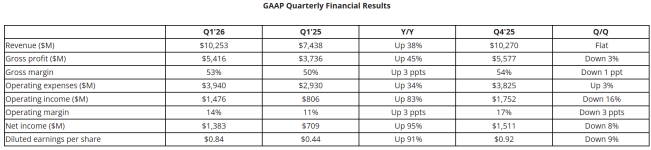
Currently, Intel has 70% of the DC unit sales, but only 58% of the DC revenue. It seems like Intel is currently purchasing market share. I also think that AMD is likely production constrained.

Still, if both AMD and Intel are constrained, that's really not a good thing for anyone.
 
Published: April 22, 2026 | Source: Digitimes | Author: Mark Campbell

Industry hopes that Intel 18A can alleviate CPU shortages​

The world isn’t just facing a memory shortage; it’s also facing a CPU shortage. Intel is currently capacity-limited, meaning it cannot make enough CPUs to meet demand. AI datacenter demand is driving sales of large Xeon processors, making some of Intel’s other CPUs scarce. According to Digitimes, many CPUs are now “effectively unavailable”, with others having more premium prices.

Many in the industry hope that Intel can alleviate this issue with 18A capacity expansion and yield improvements. This will make Intel’s new Panther Lake (Core Ultra 3 series) and newly released Wildcat Lake (Core 3 Series) CPUs more widely available and alleviate the shortage. Intel 18A capacity and yield improvements should also increase Intel “Clearwater Forest” Xeon CPU availability, further alleviating the CPU shortage.

Unlike TSMC’s newest lithography nodes, Intel 18A is only used to build Intel products. That means that 18A improvements will only impact the CPU market. That’s good news for CPU customers, as this means that extra capacity and yield improvements will not be utilised for AI accelerators, GPUs, or DRAM.


Recent rumours have also suggested that Intel plans to release “another Raptor Lake Refresh“. This will revive its 13th/14th generation Core processors on socket LGA-1700 to also combat CPU shortages. This will help Intel to satisfy the world’s demand for CPUs using Intel’s now legacy lithography nodes.

Right now, the CPU shortage is expected to get worse before it gets better. Hopefully, CPU manufacturers will be able to respond to this demand increase and alleviate shortages. Otherwise, more price hikes may be on the horizon.

You can join the discussion on the world’s CPU shortage on the OC3D Forums.

Hopefully 18A yields improve quickly, as the current shortage is really hitting the market hard.
 
So according to Intel they sold LESS DC CPU processors in Q1 2026 compared to Q1 2025. The increase is revenue was do to price adjustments (27% increase in prices). I am still trying to understand this whole shortage thing. It looks vey much like the wrong supply on the wrong processor at the wrong time. But we know that Intel is not selling more CPU units, correct? Did they expect units to drop more?

AMD might help us figure this out.

Any help that can be provided on this shortage with 5% less units sold YoY would be greatly appreciated
 
So according to Intel they sold LESS DC CPU processors in Q1 2026 compared to Q1 2025. The increase is revenue was do to price adjustments (27% increase in prices). I am still trying to understand this whole shortage thing. It looks vey much like the wrong supply on the wrong processor at the wrong time. But we know that Intel is not selling more CPU units, correct? Did they expect units to drop more?

AMD might help us figure this out.

Any help that can be provided on this shortage with 5% less units sold YoY would be greatly appreciated
I couldn't find anything saying that Intel's unit shipments went down. Certainly most discussions have been about everything in DC being supply limited .... thus the higher ASP's.
 
I couldn't find anything saying that Intel's unit shipments went down. Certainly most discussions have been about everything in DC being supply limited .... thus the higher ASP's.
it is in the 10Q (see below). So CPUs are down and price is up and Intel is constrained through 2026 by internal capacity issues. Correct?

FROM 10Q
DCAI revenue increased $926 million from Q1 2025, primarily driven by $696 million of higher server revenue due to a 27% increase in server ASPs. The increase inserver ASPs was primarily driven by a higher mix of premium products sold in Q1 2026 and demand-based pricing actions in part to offset higher input costs. Thisincrease in server revenue was partially offset by a 5% decrease in volume compared to Q1 2025. Market demand exceeded our available product supply due tointernal supply constraints, which limited our ability to fully meet customer demand. Though we expect these supply constraints to persist throughout the remainder of2026, we continue to add capacity in our internal factories to increase supply availability and mitigate these constraints. Other DCAI product revenue was $935 million,up $230 million from Q1 2025, primarily driven by higher networking customer-related demand
 
it is in the 10Q (see below). So CPUs are down and price is up and Intel is constrained through 2026 by internal capacity issues. Correct?

FROM 10Q
DCAI revenue increased $926 million from Q1 2025, primarily driven by $696 million of higher server revenue due to a 27% increase in server ASPs. The increase inserver ASPs was primarily driven by a higher mix of premium products sold in Q1 2026 and demand-based pricing actions in part to offset higher input costs. Thisincrease in server revenue was partially offset by a 5% decrease in volume compared to Q1 2025. Market demand exceeded our available product supply due tointernal supply constraints, which limited our ability to fully meet customer demand. Though we expect these supply constraints to persist throughout the remainder of2026, we continue to add capacity in our internal factories to increase supply availability and mitigate these constraints. Other DCAI product revenue was $935 million,up $230 million from Q1 2025, primarily driven by higher networking customer-related demand
The logical explanation is that Intel’s DC CPU product mix has changed significantly since Q1 2025. The ASP increase is likely driven by this shift in the mix more than price hikes on identical products. This year’s newer 6th Gen products are still ramping up.

In Q1 2025, Intel was transitioning from 4th Gen Sapphire Rapids to 5th Gen, so there may have been an impact from clearing out Sapphire Rapids inventory, which also created a higher volume comp.

Another way of looking at this to count the cpu cores, I would be willing to bet that the total shipped core counts have meaningfully increased (eg, by 10%-15%).
 
The logical explanation is that Intel’s DC CPU product mix has changed significantly since Q1 2025. The ASP increase is likely driven by this shift in the mix more than price hikes on identical products. This year’s newer 6th Gen products are still ramping up.

In Q1 2025, Intel was transitioning from 4th Gen Sapphire Rapids to 5th Gen, so there may have been an impact from clearing out Sapphire Rapids inventory, which also created a higher volume comp.

Another way of looking at this to count the cpu cores, I would be willing to bet that the total shipped core counts have meaningfully increased (eg, by 10%-15%).
I was thinking the same thing.

Still, if they are yielding larger core count CCD's, then that in itself is a good sign for Intel.... albeit mostly Intel 7. I think that Granite Rapids on Intel 3 is likely "competitive enough" with AMD Turin to up their ASP .... especially since demand for the higher core count is currently insatiable.

I think that it's hard right now NOT to make a profit selling DC processors :)
 
The issues is the market. you can count cores but we need to look at the number of servers CPUs being sold. Obviously cores increases.
If Intel is selling less CPUs (and Q1 2025 was not a high mark for Intel CPU sales). Then it means the CPU market is not increasing dramatically or intel is losing unit share. It is price per CPU that is increasing (Intel clearly states this). then that is different than more CPUs being sold.

AMD will report out and them mercury research will give us numbers on CPU sales. And my fundamental question is how there can be a shortage (mainly on 7/10) if more CPUs are not being sold than last year.

I think Server CPU sales are an important indicator of Intels and AMDs position in this market. lets see what AMD tells us tomorrow.
 
Back
Top