






Zhonghao Xinying was founded in 2018 by Yanggong Yifan, a Stanford and University of Michigan-trained electrical engineer
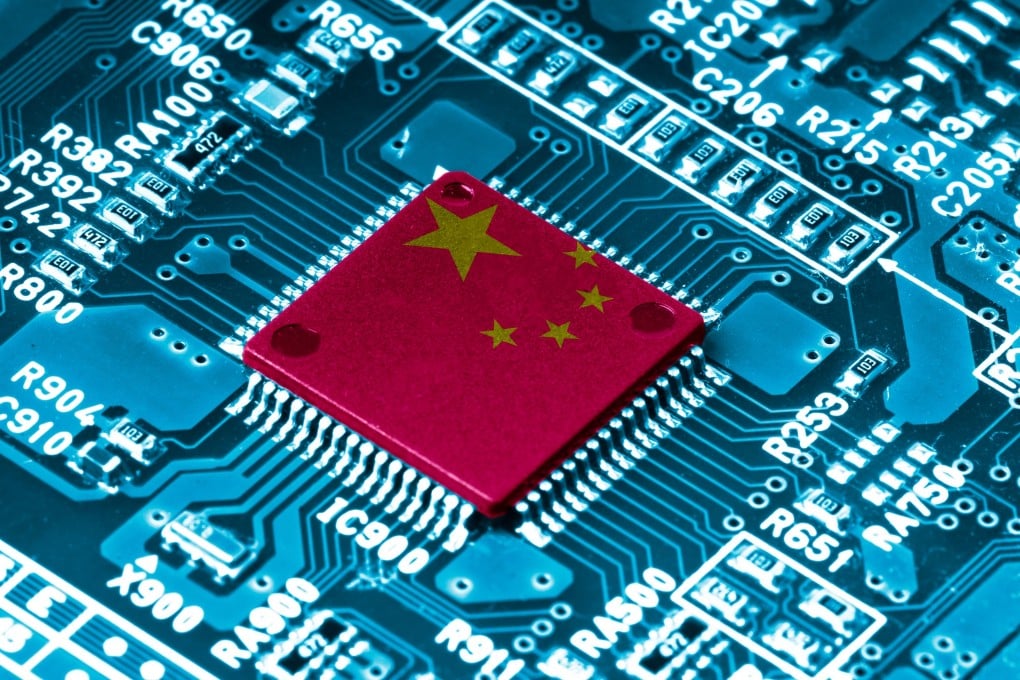
Chinese AI chip start-up Zhonghao Xinying has emerged as a home-grown alternative to Nvidia with a new tensor processing unit (TPU), just as Google shakes up Nvidia’s lock on the market by selling its in-house tensor chips directly to major tech firms.
The Hangzhou-based firm, also known as CL Tech, said its self-developed general-purpose tensor processing unit (GPTPU) went into mass production as early as 2023. Its flagship chip, dubbed Chana, delivers up to “1.5 times the compute performance” of Nvidia’s A100 tensor core graphics processing unit (GPU), while “cutting energy consumption by 30 per cent for equivalent large-model workloads and reducing per-unit compute cost to 42 per cent of Nvidia’s”, according to the company.
GPUs are flexible, general-purpose parallel processors originally built for graphics applications but now widely used for AI training and inference. TPUs, a type of application-specific integrated circuit, developed by Google for neural-network training and inference, offer higher efficiency and throughput for certain deep learning workloads.
Nvidia’s GPUs are considered the backbone of the global AI boom, making the firm the world’s most valuable company, yet many customers are keen to reduce their dependence on the US chip giant.
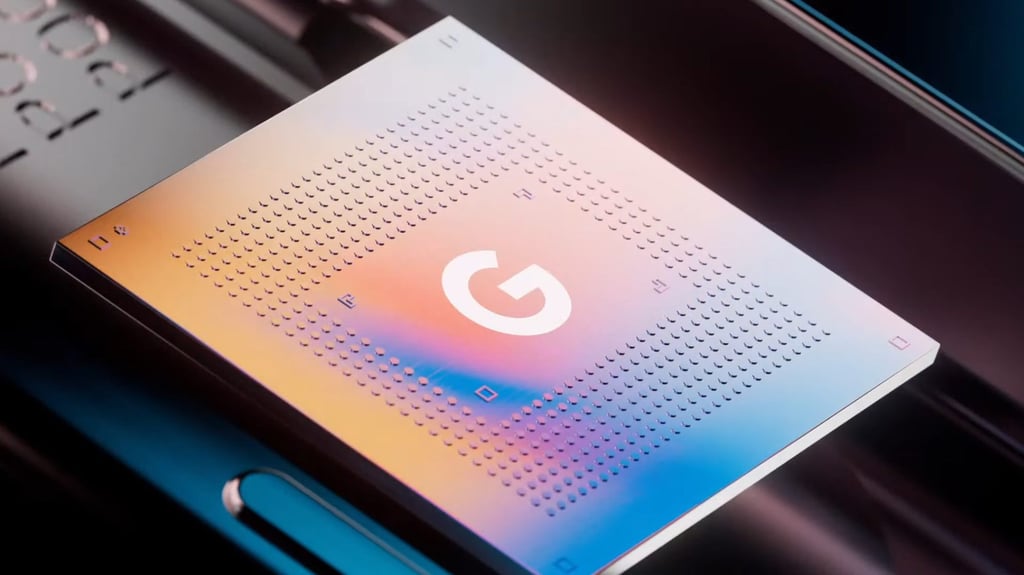
Google’s tensor processing unit. Photo: Handout
Google’s recent decision to supply TPUs directly to Anthropic and Meta Platforms, instead of only providing access through its cloud services, has positioned it more as a direct rival to Nvidia. The move even rattled market confidence in Nvidia’s long-term grip on the sector.
Chinese AI developers began to seek alternatives to Nvidia after Washington restricted access to the US firm’s most advanced products.
Zhonghao Xinying was founded in 2018 by Yanggong Yifan, a Stanford and University of Michigan-trained electrical engineer who previously worked on chip architectures at Google and Oracle. He was involved in the full design-to-deployment cycle of Google’s TPU v2, v3 and v4, according to the Chinese company.
CTO and co-founder Zheng Hanxun, a graduate of the University of Southern California, previously worked in chip-design roles at Oracle and Samsung Electronics’ research and development centre in Austin, Texas, according to his LinkedIn profile.
In an interview published in September by Sincere Capital, an investor in the start-up, Yanggong said that during his years in Silicon Valley “it became clear that a US-China tech war was inevitable”, adding that AI and the compute infrastructure behind it would “become the core battleground”.
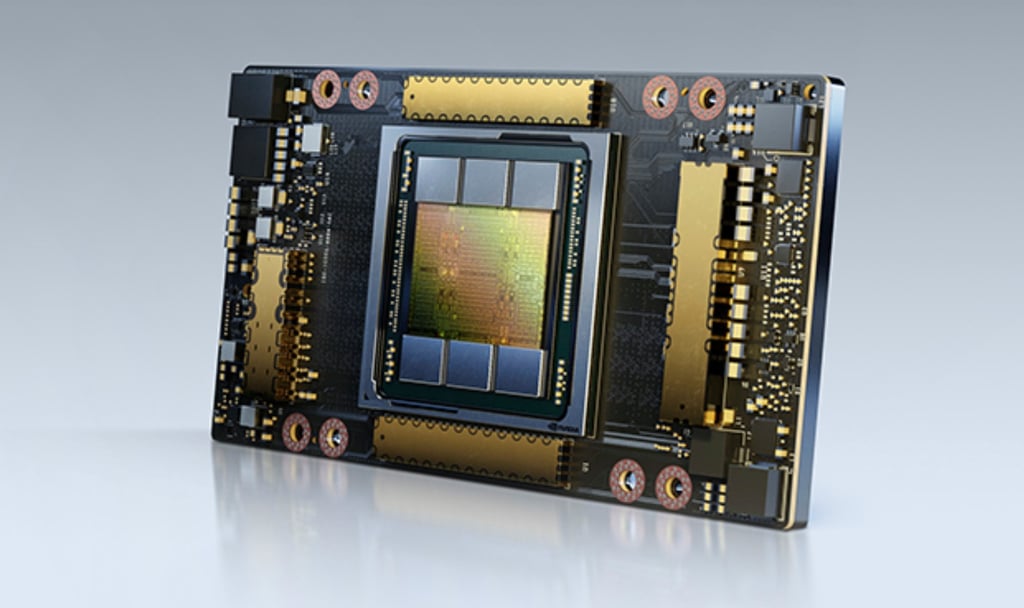
The Nvidia A100. Photo: Handout
Yanggong said Zhonghao Xinying’s TPU features “fully self-controlled IP cores, a custom instruction set and a wholly in-house compute platform”. “Our chips rely on no foreign technology licences, ensuring security and long-term sustainability from the architectural level,” he was quoted as saying.
“We have achieved a 1.5x performance increase while reducing power consumption to 75 per cent using a manufacturing process that is an order of magnitude lower than that of leading overseas GPU chips,” Yanggong said in a June speech.
As a fabless chip company, Zhonghao Xinying outsources the fabrication of its chips to foundries, but it has not publicly revealed its manufacturing partners.
The company also introduced Taize, a large-scale compute cluster linking 1,024 Chana units, capable of supporting training for trillion-parameter-class foundation models. Yanggong told an industry conference in June that a “next-generation TPU” was in the works, without giving a timeline.
In August, Zhonghao Xinying announced plans to acquire Shanghai-listed auto-parts maker Tip Corporation, a move that pushed the latter’s shares from roughly 30 yuan at the time to 140 yuan today.
Financial filings for the acquisition revealed that in 2023 Zhonghao Xinying generated 485 million yuan (US$68.4 million) in revenue and 81.3 million yuan in net profit, largely from the Chana TPU. Revenue rose to 598 million yuan in 2024, with net profit edging up to 85.9 million yuan, but for the first half of this year it reported revenue of just 102 million yuan and a loss of 144 million yuan.
Zhonghao Xinying signed a performance-guarantee agreement with its investors that requires the company to go public by the end of 2026, or a share buy-back clause will be triggered. Tip Corporation said in a recent filing that the chip start-up had already begun work on a separate initial public offering.
Chinese AI start-up takes on Google in tensor processing unit race
Zhonghao Xinying was founded in 2018 by Yanggong Yifan, a Stanford and University of Michigan-trained electrical engineer.
 www.scmp.com